Archives
- 2026-07
- 2026-06
- 2026-05
- 2026-04
- 2026-03
- 2026-02
- 2026-01
- 2025-12
- 2025-11
- 2025-10
- 2023-07
- 2023-06
- 2023-05
- 2023-04
- 2023-03
- 2023-02
- 2023-01
- 2022-12
- 2022-11
- 2022-10
- 2022-09
- 2022-08
- 2022-07
- 2022-06
- 2022-05
- 2022-04
- 2022-03
- 2022-02
- 2022-01
- 2021-12
- 2021-11
- 2021-10
- 2021-09
- 2021-08
- 2021-07
- 2021-06
- 2021-05
- 2021-04
- 2021-03
- 2021-02
- 2021-01
- 2020-12
- 2020-11
- 2020-10
- 2020-09
- 2020-08
- 2020-07
- 2020-06
- 2020-05
- 2020-04
- 2020-03
- 2020-02
- 2020-01
- 2019-12
- 2019-11
- 2019-10
- 2019-09
- 2019-08
- 2019-07
- 2019-06
- 2019-05
- 2019-04
- 2018-07
-
Our results show that COX and
2020-10-30
Our results show that COX-1 and COX-2 inhibition improve cognitive performance and decrease the neuronal insult during HH. However, when a neuroinflammatory response was observed, COX-1 inhibition was more effective than COX-2 inhibition at reducing microglial activation and augmenting pro-inflammat
-
Our results demonstrate that pt PGE
2020-10-30
Our results demonstrate that 17-pt-PGE2 - in addition to its described effects on EP1 and EP3 receptors - also acts as an EP4 agonist and thereby enhances vascular barrier function. Materials and methods Results Discussion In this study we demonstrate that the purported EP1/EP3 receptor ag
-
Judging from the densitometric analysis of the Western blots
2020-10-30
Judging from the densitometric analysis of the Western blots, CYP2E1 protein was expressed, although at very low levels, by PT cells. This corresponds to previous observations [10], showing that CYP2E1 was expressed in the PT, although expression was higher in the distal tubule. Testosterone 6β-hyd
-
br Acknowledgments The authors thank
2020-10-30
Acknowledgments The authors thank Dr. Tai-Sheng Cheng, Yu-Wen Huang and Ting-Wei Gau for technical assistance. This work was supported by the National Science Council of TaiwanNSC 98-2320-B-024-002-MY3 and National University of TainanAB102-216. This information is available free of charge via th
-
PNU-120596 DNA bound Ku proteins recruit DNA PKcs and thereb
2020-10-30
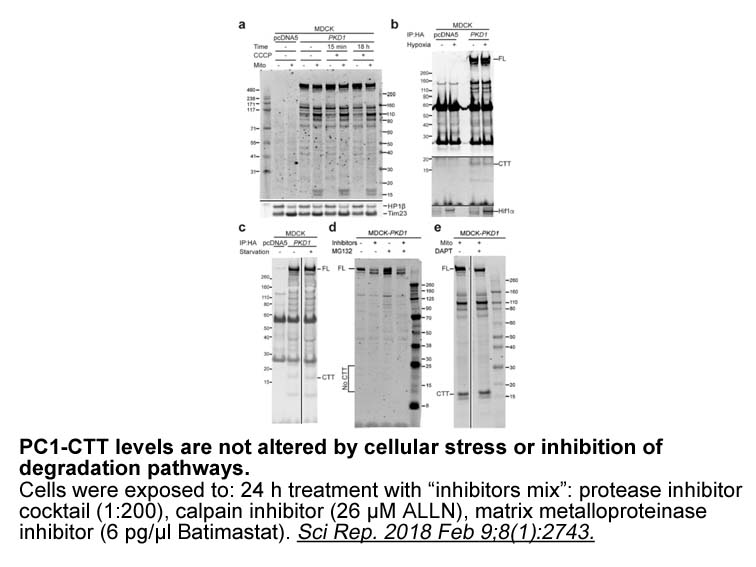
DNA-bound Ku proteins recruit DNA-PKcs; and thereby translocate into the duplex by one helical turn, leaving DNA-PKcs near the DNA terminus to assist in tethering the broken ends together [25]. In addition to keeping the DSBs in close proximity, DNA-PKcs may prevent exonucleolytic degradation of the
-
Our finding that one enzyme acts both as a
2020-10-30

Our finding that one enzyme acts both as a primase and a DNAP poses evolutionary and mechanistic questions. In particular, why do cellular organisms require two enzymes to fulfill de novo DNA synthesis? The inability of cellular replicases to perform as primases might be dictated by the challenges a
-
Although the formation and toxicity of DPC
2020-10-30
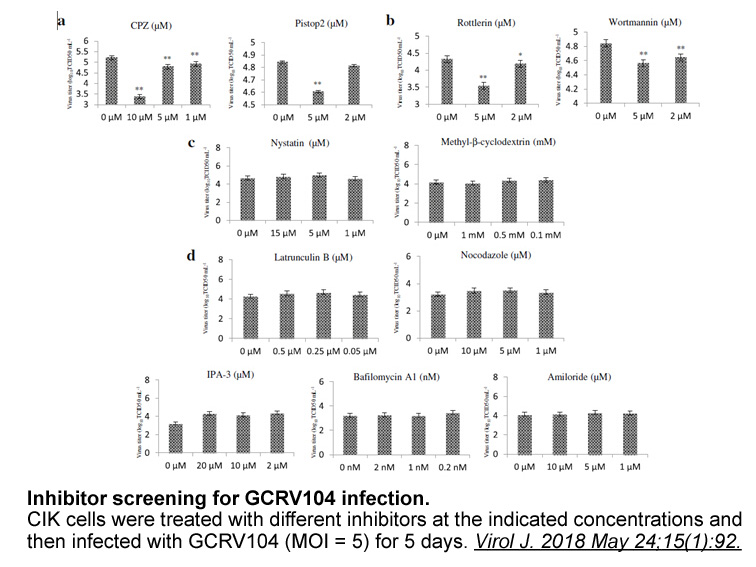
Although the formation and toxicity of DPC is theoretically acceptable, it is difficult to evaluate the specific role of DPC and its repair enzyme MGMT in the cytotoxic and mutagenic effects because DPCs are estimated to constitute only 1%–3% of total DNA damage when (+)-Apogossypol are exposed to
-
br Introduction br Sphingolipid metabolism Sphingolipids are
2020-10-30
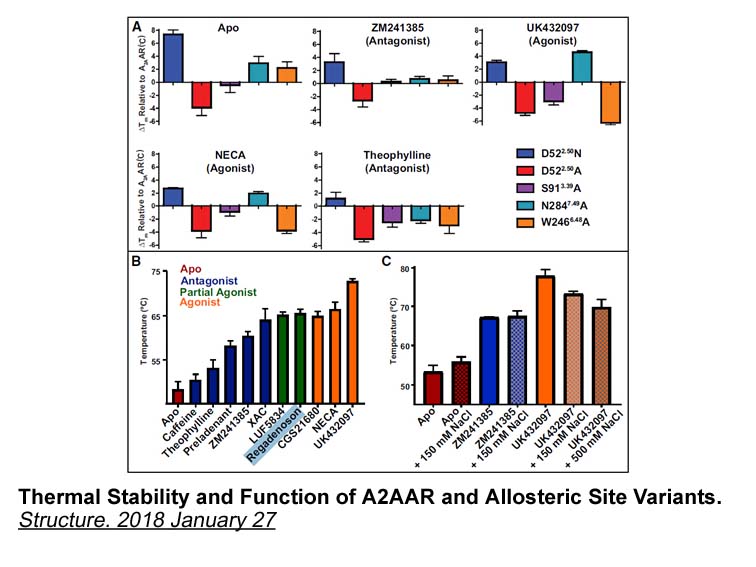
Introduction Sphingolipid metabolism Sphingolipids, are fundamental constituents of all eukaryotic membranes and their metabolism is carried out by a broad array of anabolic and T7 High Yield Cy5 RNA synthesis with ceramide as their hub (for a review, (Hannun and Obeid, 2018)). Ceramide can be
-
br Contributors br Acknowledgements br Introduction Pemphigu
2020-10-30
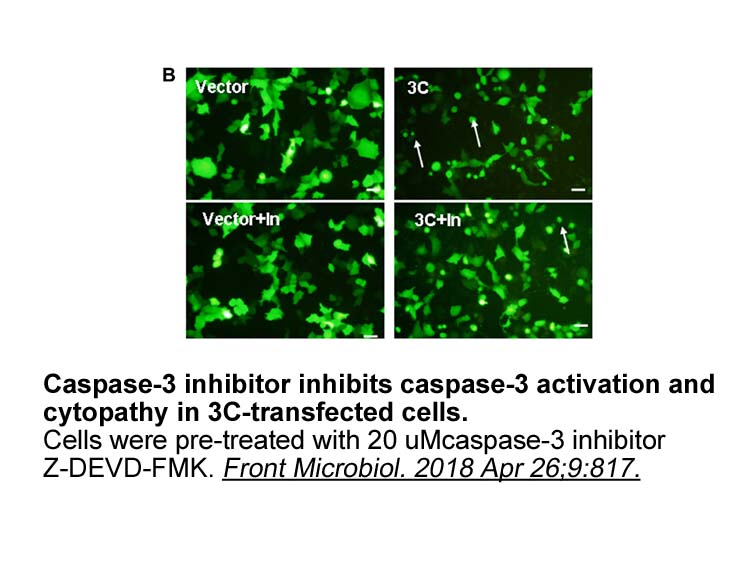
Contributors Acknowledgements Introduction Pemphigus disorders are characterized by autoantibodies binding to desmosomes between epidermal cells, resulting in the loss of cell to cell adhesion and blister formation. In pemphigus foliaceus, autoantibodies predominantly bind to desmoglein 1,
-
amatoxin The study reported here had the primary goal
2020-10-30
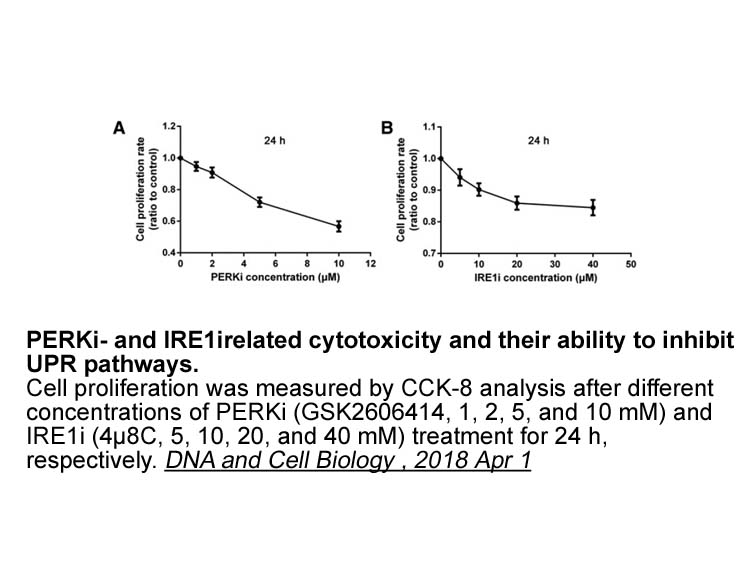
The study reported here had the primary goal to compare the methylation of HPV late genes with methylation of the DAPK promoter, and with histological or cytological diagnoses among high-risk patients that were referred to a colposcopy clinic based on abnormal cervical cytology. Based on the literat
-
The sequence identity of CYP A with CYP A
2020-10-30
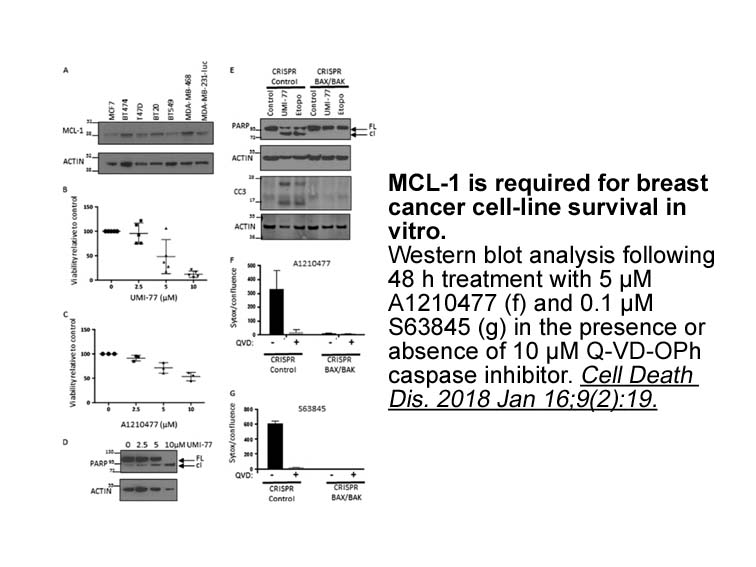
The sequence identity of CYP3A163 with CYP3A sequences from other species is maximum in reptiles ranging (75-91)%, gradually decreasing from Stattic synthesis (63-71)% to mammals 62% to downwards based on evolutionary distances. The high level of homology with CYP3A77 in Alligator mississippiensis s
-
br Materials and methods br Results br Discussion We
2020-10-30
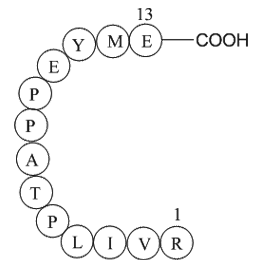
Materials and methods Results Discussion We confirmed the published cDNA and protein sequence of feline CSF-1R and stably cloned the cat receptor into the Ba/F3 cell line. Activation of feline CSF-1R by recombinant human CSF-1 was previously tested by Woolford et al. [14]. Expression of onc
-
In the present study Asian swamp
2020-10-30
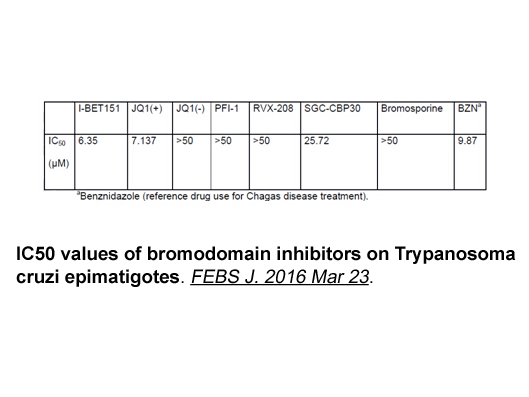
In the present study, Asian swamp eel CXCR1a (MaCXCR1a), MaCXCR1b, MaCXCR2, MaCXCR3a, MaCXCR3b, and MaCXCR4 were identified from the Asian swamp eel genome. To explore the features and functions of these CXCRs, we focused on the identification and molecular characterization of MaCXCRs, and indoximod
-
In conclusion adipose PGD suppressed the lipolysis by decrea
2020-10-30
In conclusion, adipose PGD2 suppressed the lipolysis by decreasing the intracellular cAMP level through DP2R. Therefore, PGD2 enhanced adipocyte differentiation (lipid accumulation) through both repression of the lipolysis via DP2R and activation of the lipogenesis via PPARγ. Thus, L-PGDS and DP2R a
-
Two isoforms of intracellular ER ER and ER
2020-10-30
Two isoforms of intracellular ER, ERα, and ERβ, after binding to estrogens and translocate to the nucleus, activate some transcription factors and signaling pathways. The deregulation of estrogenic pathways can elevate transcriptional activity contributed to the development of cancer. Expression of
11420 records 480/762 page Previous Next First page 上5页 476477478479480 下5页 Last page